
Custom Compostable Food Packaging for Restaurants: Logo Printing, Private Label and Material Choices
Start with the Type of Customization
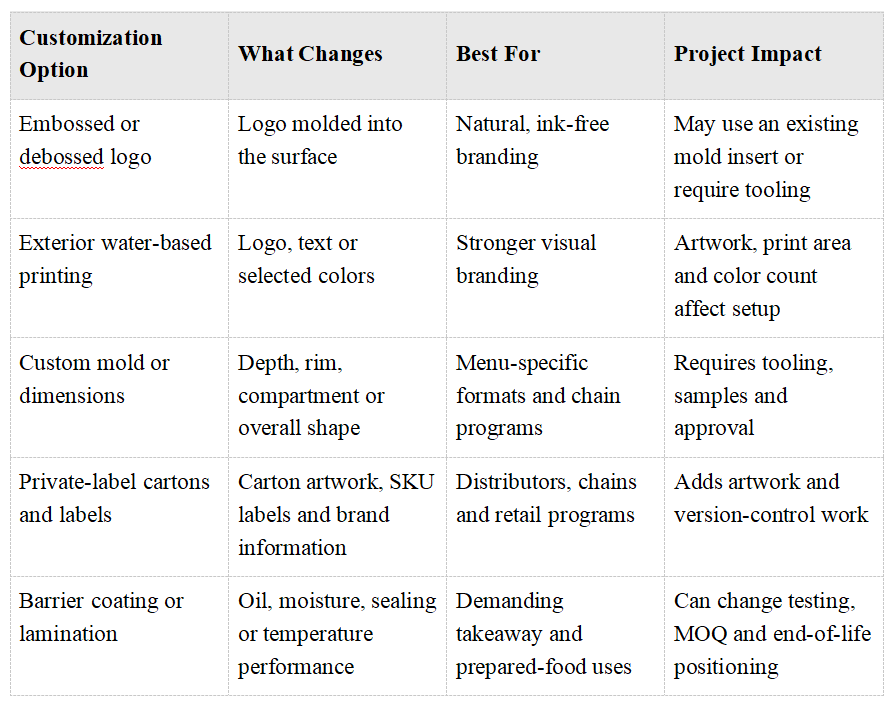
A custom project does not always require a completely new mold. Buyers can control cost and development time by deciding first whether they need visual branding, structural changes, private-label packaging, or a new barrier system.
Logo Branding: Printing, Embossing or Molded Identity?
Logo method should follow the container geometry. Flat lid zones are usually the easiest areas for printed branding, while ribs, hinges and latching areas are better kept clear.
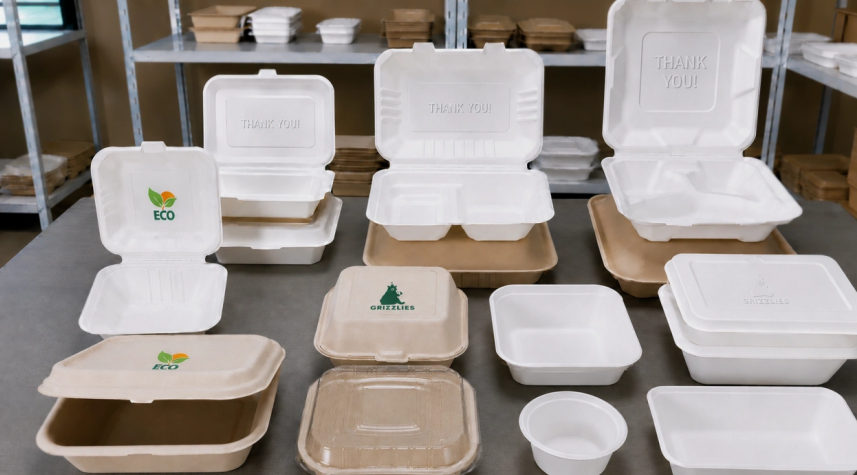
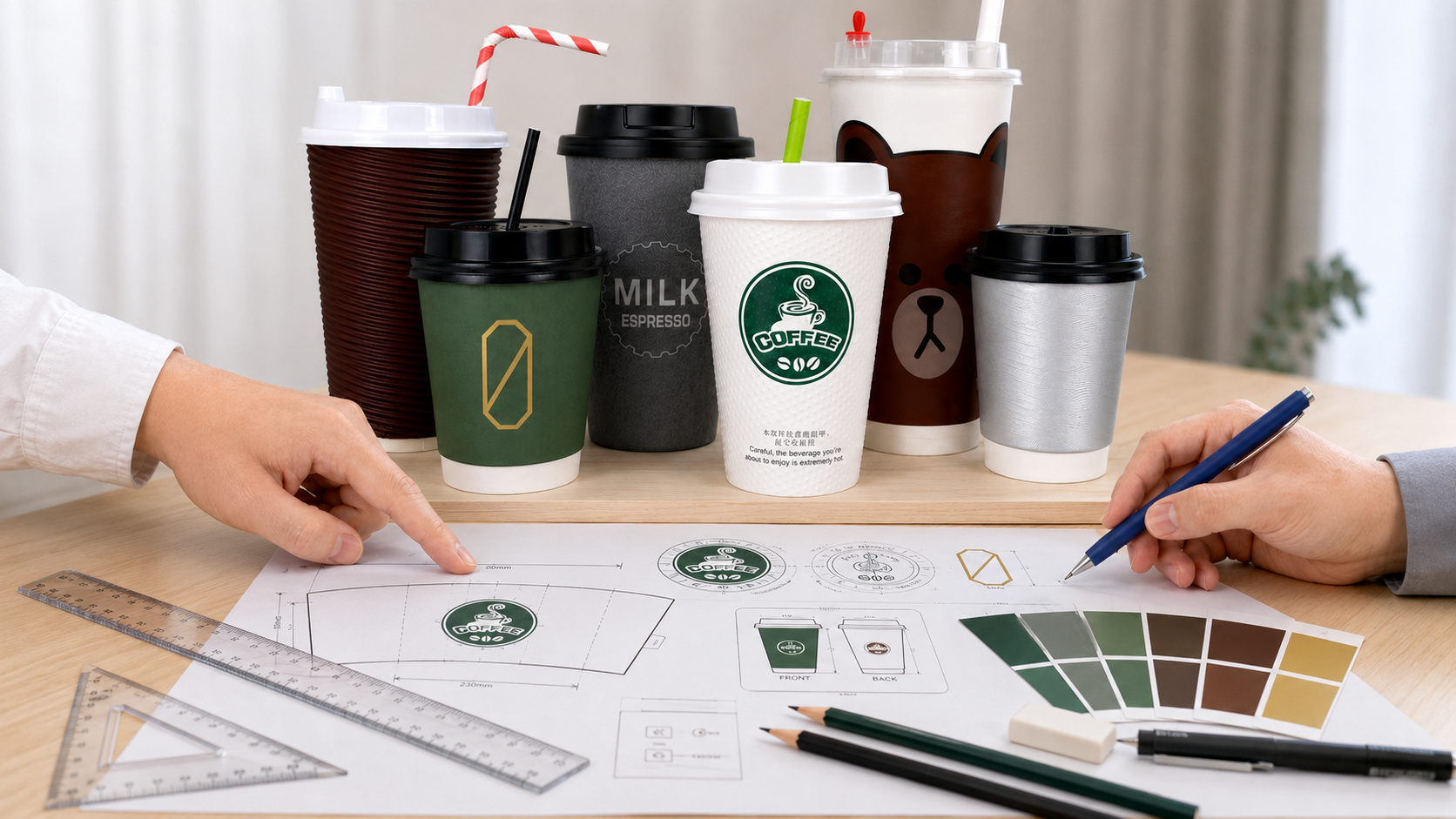
Exterior water-based printing can create a stronger visual identity when the ink system, print location and intended use are properly specified. Embossed or debossed logos create a quieter premium effect, while a fully custom mold allows branding and structural features to be designed together.
For restaurants using hinged formats, buyers can compare existing bagasse clamshell containers before deciding whether a standard size can carry the required branding or a custom mold is justified.
Private Label Means More Than Adding a Logo
A private-label program should define the complete commercial identity of the SKU. In addition to the container itself, the project may include master artwork, carton graphics, product codes, case labels, barcode or retailer information, approved logo files, packaging specifications and document versions.
For multi-SKU or multi-brand programs, the buyer and manufacturer should agree which artwork version is approved, which product revision it belongs to, and what changes require a new sample or document review.
Choose the Material Structure Around the Food
Standard molded bagasse works well for many foodservice formats. When meals need stronger oil, moisture or holding performance, the molded-fiber base can be upgraded.
• Standard molded bagasse. A practical base for many dine-in, takeaway and catering applications where the normal molded-fiber structure meets the use requirement.
• Barrier-coated bagasse. PFAS-free coating systems can be selected for applications that need stronger oil or moisture resistance while retaining a molded-fiber format.
• Laminated bagasse. PLA, PET, CPET or EVOH-containing structures can be considered where the project needs heat sealing, stronger moisture or oxygen barriers, or more demanding prepared-food performance. End-of-life claims must follow the finished structure and its verified certification scope.
For projects that need different capacities or lid formats, existing bagasse food containers provide useful starting points before developing a new custom structure.
How Customization Changes MOQ, Tooling and Lead Time
MOQ and lead time should be planned by project complexity. Three routes are common:
1. Brand an existing SKU — Use a standard product with carton labels, selected exterior printing or a compatible embossing solution. This normally carries the lowest development burden.
2. Modify an existing platform — Keep the basic footprint but change logo treatment, compartments, rim details or other mold features. Tooling and sample approval become part of the project.
3. Develop a new structure — Create a new mold or add a new coating or lamination system. This route requires more engineering, sample testing and production validation before scale-up.
Actual MOQ and timing depend on the SKU, tooling, print coverage, barrier structure, quantity and production schedule. Confirm them during quotation rather than applying one lead time to every project.
A Sample-Gated OEM/ODM Development Route
1. Define the use case — Specify menu items, serving temperature, grease or sauce level, holding time, delivery conditions and the target market.
2. Lock the base specification — Choose the size, capacity, compartments, lid system and standard, coated or laminated structure.
3. Approve branding and tooling — Confirm the vector logo, print colors, embossing position, mold changes, carton artwork and any private-label details.
4. Test physical samples — Evaluate fill performance, lid fit, stacking, leakage or grease resistance, reheating requirements and real delivery handling as applicable.
5. Release mass production — Approve the final sample and specification, then control artwork, material and mold revisions through production.
Build a Better Custom Packaging Brief
A clear brief helps the factory quote the right solution faster. Before requesting a custom project, buyers should:
• Send a reference SKU, product photo or drawing and specify size, capacity and compartment requirements.
• Describe the actual food application, holding conditions and any performance requirement that drives coating or lamination selection.
• Attach vector logo files and state whether the preferred branding method is printing, embossing, debossing or custom mold integration.
• Estimate trial quantity, expected order volume and monthly demand so tooling and MOQ can be planned realistically.
• Confirm destination market, destination port, launch timing and any required food-contact or compostability documentation.
Why Work Directly with Grizzlies
Direct access to the teams responsible for molds, samples, material structures and production helps custom projects move efficiently. Grizzlies combines 15+ years of OEM/ODM experience with 11 production bases, 280+ automated machines and capacity support for large-volume B2B programs. Controlled samples and clear specifications help keep the approved design consistent as volumes grow.
Restaurant groups, distributors and private-label buyers can request a custom packaging quotation with product requirements, logo files, estimated volume and target market details.
A strong custom bagasse program starts with the food and operating requirements, then adds branding, private-label control and barrier technology where they create value. The right route balances brand impact, tooling, MOQ, documentation and long-term supply.
Shenzhen Grizzlies Industries Co.,LTD
Shenzhen Grizzlies Industries Co.,LTD
+ +86 137 1519 2986
email us here
Legal Disclaimer:
EIN Presswire provides this news content "as is" without warranty of any kind. We do not accept any responsibility or liability for the accuracy, content, images, videos, licenses, completeness, legality, or reliability of the information contained in this article. If you have any complaints or copyright issues related to this article, kindly contact the author above.
